
It Happened One Night is mainly remembered today as the first of only three movies that won all five top Academy Awards – Best Picture, Best Director, Best Actor, Best Actress, and Best Screenplay. Luckily for us, it’s the most delightful as well. The story is one that will be familiar – a mismatched man and woman take a cross-country trip together and have to cooperate. Disasters ensue and they fall in love along the way.

Starring the endlessly charming Clark Gable and Claudette Colbert, the movie ushered in the era of the screwball comedy, leading to Bringing Up Baby, My Man Godfrey, His Girl Friday, and many more. The basic plot has been used ever since for all forms of media, and not only for love stories. Even movies like Planes, Trains, and Automobiles can trace the plot back to It Happened One Night.
The movie was a massive hit, but wasn’t expected to do much at the box office. Like Casablanca, the movie was planned as just another in a line of movies churned out by the studios without any particular fanfare. Frank Capra, also known for It’s a Wonderful Life and many others, directed and produced the movie for Columbia. Many well-known actors passed on the movie before it was made, including Myrna Loy, Robert Montgomery, Margaret Sullavan, and Loretta Young. Clark Gable was loaned from MGM and Claudette Colbert was just trying to fulfill her contract with Columbia. Claudette Colbert was so sure it would not win anything at the Oscars, that she planned on traveling that day and had to run to the ceremony in her traveling clothes when she learned she won.
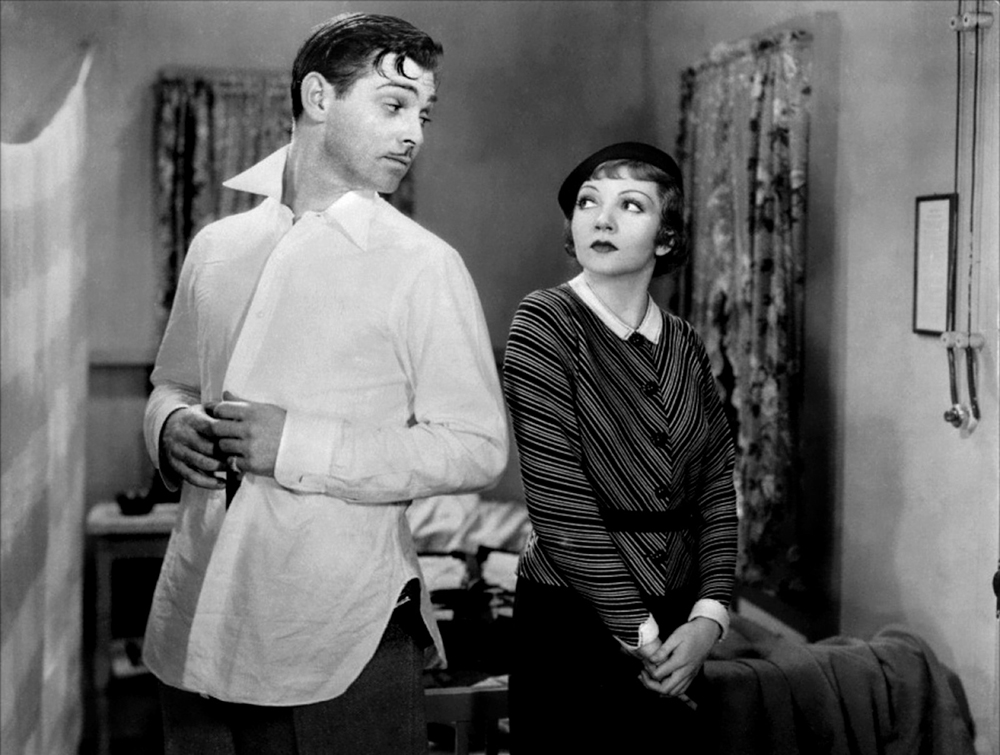

The movie is described as a pre-code movie, meaning it was before the Hays Production Code was enforced. This isn’t precisely correct. When it was filming in 1934, the Hays Code was beginning to be enforced, leading to plot points that would not have been acceptable even six months later, such as Claudette Colbert’s character having eloped before the beginning of the film. Six months later, she would have been engaged, but never allowed to annul a marriage or get a divorce. If the Hays Code had not been in partial effect, the motel scenes would have likely been very different.
Other accomplishments:
#35 on AFI’s 100 years 100 movies
#8 on AFI’s 100 years 100 laughs
#38 on 100 years 100 passions
#3 AFI’s top 10 romantic comedies
Author Amy Foster Co-Chairs the Art Deco Film Club.
